
Jakarta Traffic Test: How FuelMarble Reduced CO₂ Emissions by 10.34% and 21.75% in fuel efficiency improvement
11/23/20252 min read
In early 2023, FuelMarble (sold under an alternative product name in this test) was evaluated in one of Southeast Asia’s most demanding driving environments: Jakarta’s dense urban traffic.
A 2012 Honda Freed MPV was monitored over two months, with fuel consumption and exhaust emissions measured before and after installation.
The results were clear.
FuelMarble achieved a 10.34% reduction in CO₂ emissions and a 21.75% improvement in fuel efficiency under real Jakarta city driving conditions.
Test Summary
Location: Jakarta, Indonesia
Vehicle: Honda Freed MPV (2012), 1500 cc
Test period: 25 Jan – 25 Mar 2023
Fuel-efficiency gain: 21.75%
CO₂ reduction: 10.34%
CO emissions: 0
HC emissions: 0
The test was audited by an independent third-party and monitored over a full 12-week period in real urban traffic conditions.
Why Test FuelMarble in Jakarta?
Jakarta is known for:
Heavy stop-and-go traffic
High idling times
Frequent acceleration cycles
Hot, humid climate conditions
These factors make it an ideal real-world environment to evaluate thermal stability, combustion efficiency, and emission performance of any engine enhancement technology.
If a solution works here, it works almost anywhere.
Jakarta Test Overview (January 25 - March 25, 2023)
According to the report:
Location: Jakarta, Indonesia
Duration: 25 Jan – 25 Mar 2023
Vehicle: Honda Freed MPV 2012 / 1500cc (106,045 km)
Implementation Witness: Ir Steve Rion
Measurement Site: Jakarta exhaust testing facility
Two phases were conducted:
Before FuelMarble installation
After FuelMarble installation
Both phases included:
Odometer readings
Fuel refill amounts
Mileage per liter
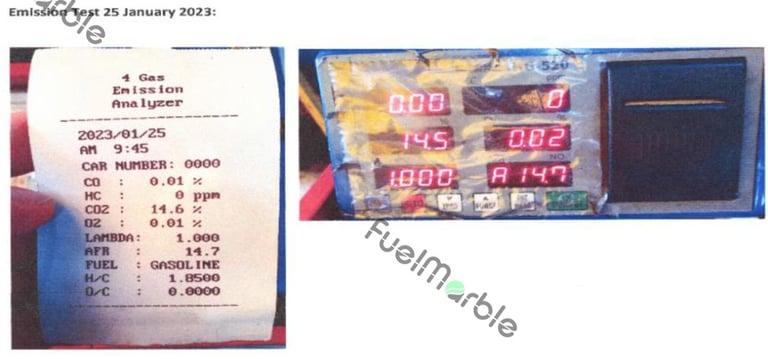
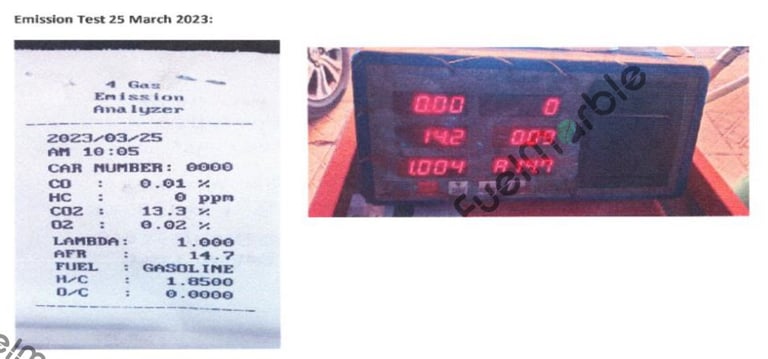
Exhaust gas measurements (HC, CO, CO₂)
Key Verified Results at a Glance
From the official test summary:
CO₂ Emissions Reduced by 10.34%
Before: 14.6 g/km
After: 13.1 g/km
Reduction: 10.34%
Fuel Efficiency Improved by 21.75%
Before average: 16.83 km/L
After average: 20.49 km/L
CO (Carbon Monoxide) reduced to 0
Before: 0.01 g/km
After: 0
HC (Hydrocarbon) reduced to 0
Complete elimination in post-test measurements.
Why This Matters?
Lower CO₂ = cleaner combustion
Zero CO = near-complete burn of carbon fuel
Zero HC = reduced smog-forming pollutants
Higher km/L = more efficient engine operation
Together, these results show both environmental and economic advantages.
Why Did CO₂ Drop After FuelMarble?
FuelMarble technology works by increasing coolant efficiency and stabilizing engine temperatures.
How does FuelMarble unleash your engine's potential?
Stable thermal conditions produce:
More complete combustion
Less wasted heat
Lower hydrocarbon residue
Reduced carbon monoxide leakage
Optimized air-fuel ratio behavior
This leads to:
→ Higher fuel efficiency
→ Lower CO₂ per kilometer
→ Lower toxic byproducts
Jakarta’s high-stress driving scenario amplifies the effect, making the improvement easy to observe in hard data.
Why This Case Study Matters for Fleets and Consumers?
This test proves that FuelMarble is not a theoretical or lab-limited technology.
It works in real roads, real heat, real congestion.
For private drivers:
Lower fuel costs
Cleaner emissions
Better engine stability
For fleets:
Lower ESG scoring
Lower maintenance and overheating risk
Stronger sustainability reporting metrics
Designed to Go Further
Contact
FuelMarble © 2025. All rights reserved.


Delivery
Household
Marine
FuelMarble, 124 City Road, London, EC1V 2NX